How to remove dog urine odor and stains is one of the most frustrating things to figure out at home — especially when the smell disappears, then comes back days later. Even after mopping, scrubbing, or using popular pet cleaners, urine can soak deep into carpet padding and porous floors, leaving lingering odor and stubborn stains behind.
The reason this happens often has less to do with how well you cleaned and more to do with how urine behaves once it soaks into carpets, floors, and other porous surfaces. In this guide, we’ll break down why dog and puppy urine odors persist, how different odor-removal methods work, and what actually helps eliminate odors and stains at the source — not just mask them.
Why Dog Urine Smell Lingers (Even After You Clean It)
Learning how to remove dog urine odor and stains effectively starts with understanding why the smell keeps coming back in the first place. Most dog parents clean up accidents right away — yet the smell somehow keeps coming back. Even after mopping, scrubbing, or using popular pet cleaners, lingering dog urine odor is one of the most frustrating problems to deal with at home.
The reason isn’t poor cleaning habits. It’s how dog urine behaves once it soaks into surfaces.
When a dog or puppy urinates, liquid can seep below the surface of carpets, padding, rugs, grout lines, wood seams, and even concrete. As the moisture evaporates, odor-causing compounds remain trapped underneath. Regular household cleaners often remove what’s visible on the surface but don’t fully address what’s been absorbed deeper below.
Over time, humidity, heat, or repeated cleaning can actually reactivate those trapped odors. This is why dog urine smell may seem to disappear temporarily, only to return days or weeks later — especially in rooms with carpeting, pet bedding, or porous flooring.
Another common issue is that many cleaners are designed to mask odors, not eliminate them. Fragrances may make a space smell fresh at first, but once they fade, the original urine odor often resurfaces. In some cases, mixing products or using cleaners that aren’t suited for pet-related odors can make the problem worse instead of better.
Understanding why dog urine odor lingers is the first step toward removing it effectively — and preventing it from coming back again.
The Fastest Way to Remove Dog Urine Odor and stains (Step-by-Step Overview)
Most lingering dog urine odor problems happen because the cleanup process stops too early or focuses only on what’s visible. To remove odor effectively — not just temporarily — the process needs to account for how urine behaves once it penetrates household surfaces.
This step-by-step overview focuses on what matters most, without relying on brand-specific instructions or measurements.
- Remove excess moisture before treating the area
Fresh or old urine can spread deeper into surfaces when moisture remains. Blotting or absorbing excess liquid first helps prevent odor compounds from being driven further below the surface. - Treat a wider area than the visible stain
Dog urine often travels beyond the spot you can see — especially in carpets, rugs, seams, or porous flooring. Focusing only on the visible area can leave odor behind that resurfaces later. - Use a cleaner designed specifically for pet-related odors
Many household cleaners are formulated to mask smells, not neutralize the compounds that cause pet urine odor. Products designed for pet environments are more likely to address odor at the source. - Allow the area to dry naturally and completely
Odor may temporarily disappear while a surface is damp, only to return once it dries. Proper drying time is an important part of evaluating whether odor has actually been eliminated. - Avoid mixing or layering multiple cleaners
Combining products or switching cleaners mid-process can reduce effectiveness and, in some cases, make lingering odors harder to remove.
Always follow the manufacturer’s label directions and safety guidance when using any cleaning product. Spot test first on a small, hidden area to ensure colorfastness, and consult a veterinarian or professional if you have concerns about specific surfaces, pets, or household conditions.
One of the biggest differences between odor-removal products comes down to how they’re designed to work — which is why understanding enzymatic versus non-enzymatic cleaners matters.
Enzymatic vs Non-Enzymatic Cleaners for Dog Urine Odor
Not all odor-removal products work the same way. One of the biggest distinctions you’ll see when researching dog urine odor solutions is whether a cleaner is enzymatic or non-enzymatic. Understanding this difference helps explain why some products seem effective at first — while others provide more consistent, long-term results.
How Enzymatic Cleaners Work
Enzymatic cleaners rely on biological enzymes to break down organic waste compounds over time. When used correctly, these enzymes can digest odor-causing materials as they remain active on a surface.
However, enzymatic cleaners typically require specific conditions to work effectively. Factors like temperature, moisture levels, surface type, and dwell time can all impact results. If conditions aren’t ideal — or if the urine has already dried deep into porous materials — enzymes may struggle to fully neutralize lingering odor.
In some cases, odor may temporarily fade and then return once the enzymatic activity slows or stops.
How Non-Enzymatic Odor Eliminators Work
Non-enzymatic odor eliminators work through chemical neutralization rather than biological digestion. Instead of relying on enzymes, these formulas are designed to bind to or neutralize odor-causing compounds directly.
Because they don’t depend on ongoing biological activity, non-enzymatic cleaners can be more predictable across different environments and surface types. This makes them commonly used in professional settings such as kennels, shelters, veterinary clinics, and high-traffic pet areas — as well as in homes.
Many non-enzymatic formulas are also designed to be used alongside routine cleaning or disinfecting, rather than replacing those steps entirely.
Which Is Better for Dog Urine Odor?
Both enzymatic and non-enzymatic cleaners have their place, depending on the situation, surface, and severity of the odor. What matters most is choosing a product designed specifically for pet-related urine odors — rather than general household cleaning or fragrance-based solutions.
For persistent or recurring odors, consistency and proper application tend to matter more than category alone.
This distinction helps explain why certain odor eliminators are commonly used in professional pet environments — and why some homeowners turn to those same solutions when standard cleaners fall short.
Once you understand why odor returns and how different cleaners work, the type of solution you choose matters more than the brand name.
The Odor & Stain Remover Designed for Pet Environments (Odorcide / K.O.E.)
When dog owners are trying to figure out how to remove dog urine odor and stains that won’t go away with standard household cleaners, many take a different approach.
In high-odor environments like home, kennels, shelters, and veterinary facilities, the focus isn’t masking smells — it’s eliminating them at the source. One product widely used across homes, kennels, shelters, and veterinary facilities is Odorcide K.O.E. (Kennel Odor Eliminator).
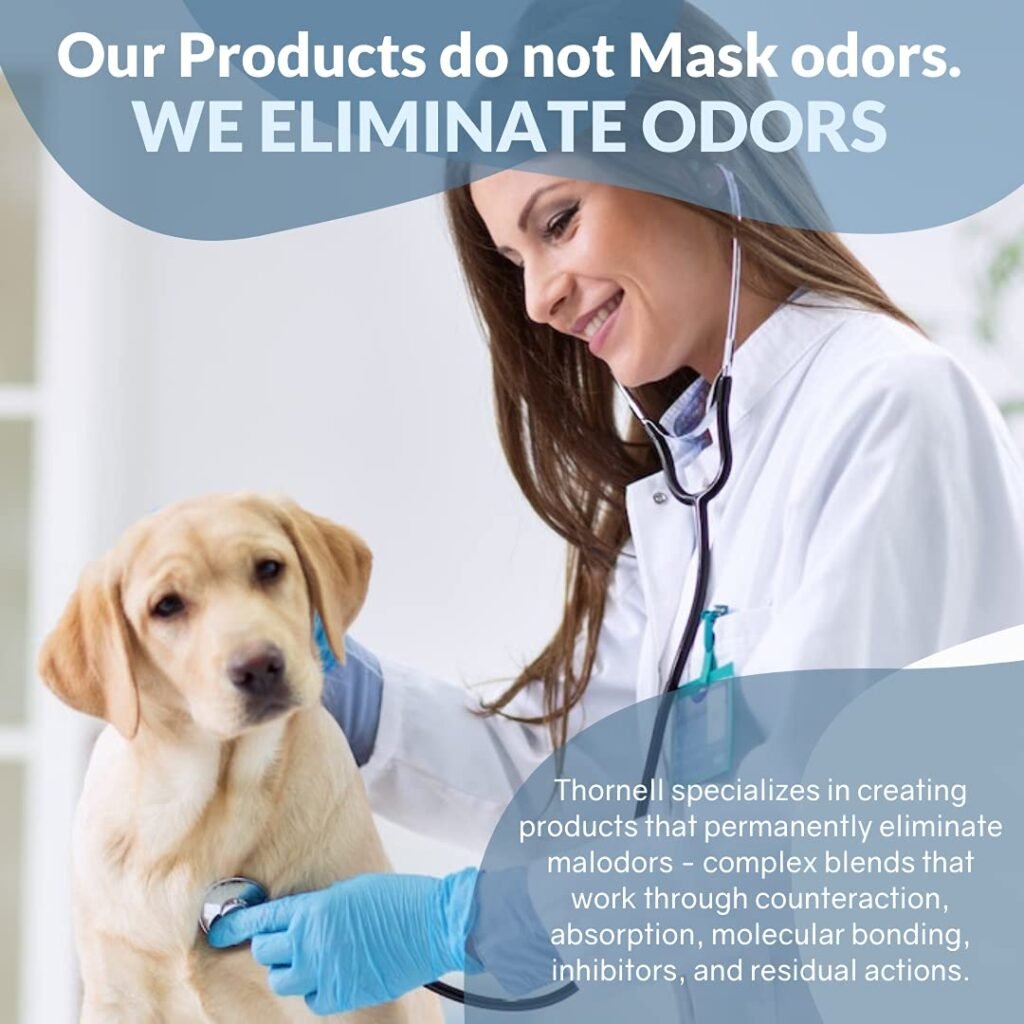
Unlike general pet sprays or just fragrance-based cleaners, K.O.E. is formulated specifically to eliminate odors rather than mask them, which is why it’s commonly used in environments where urine odors must be fully neutralized — not just covered up.
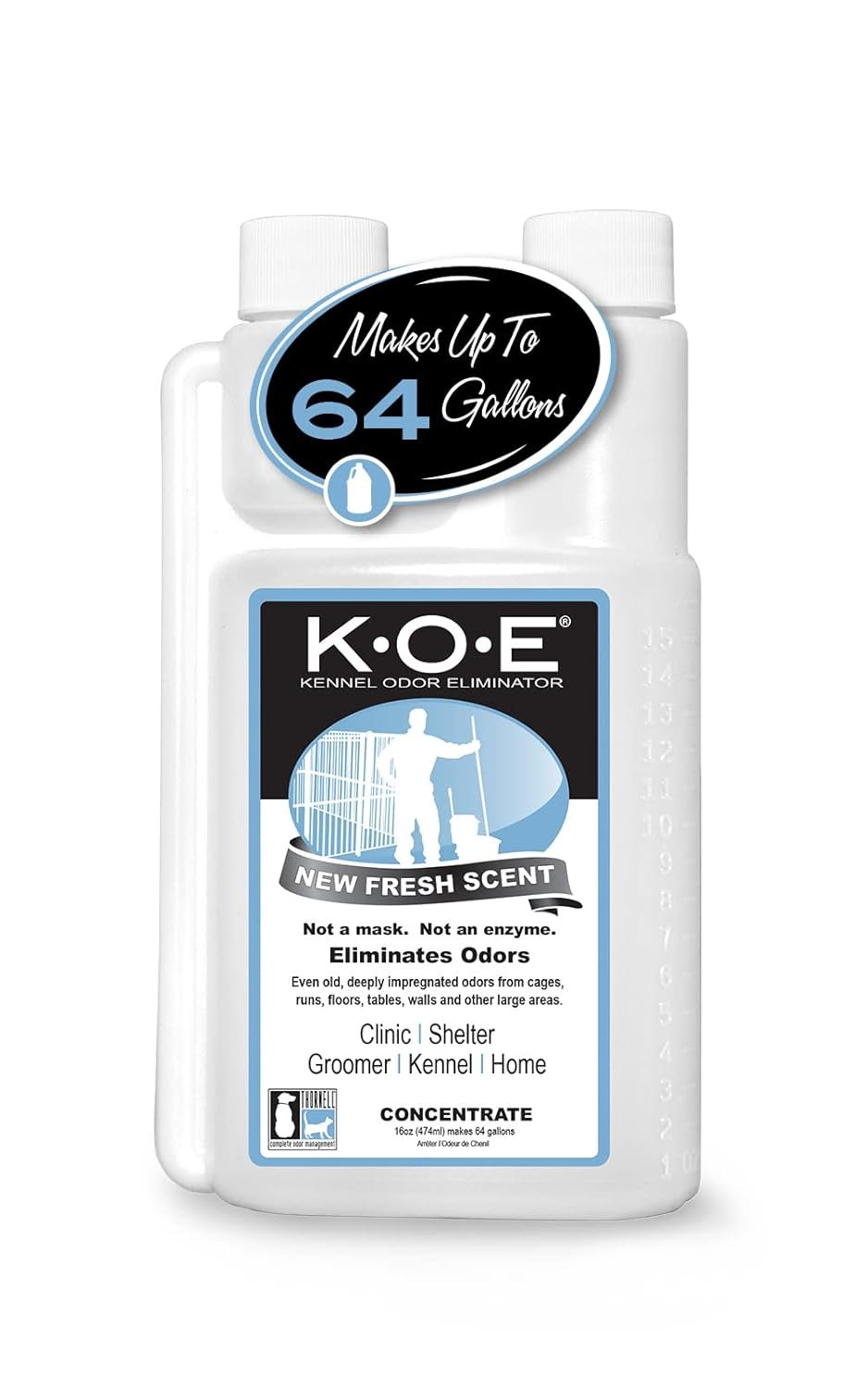
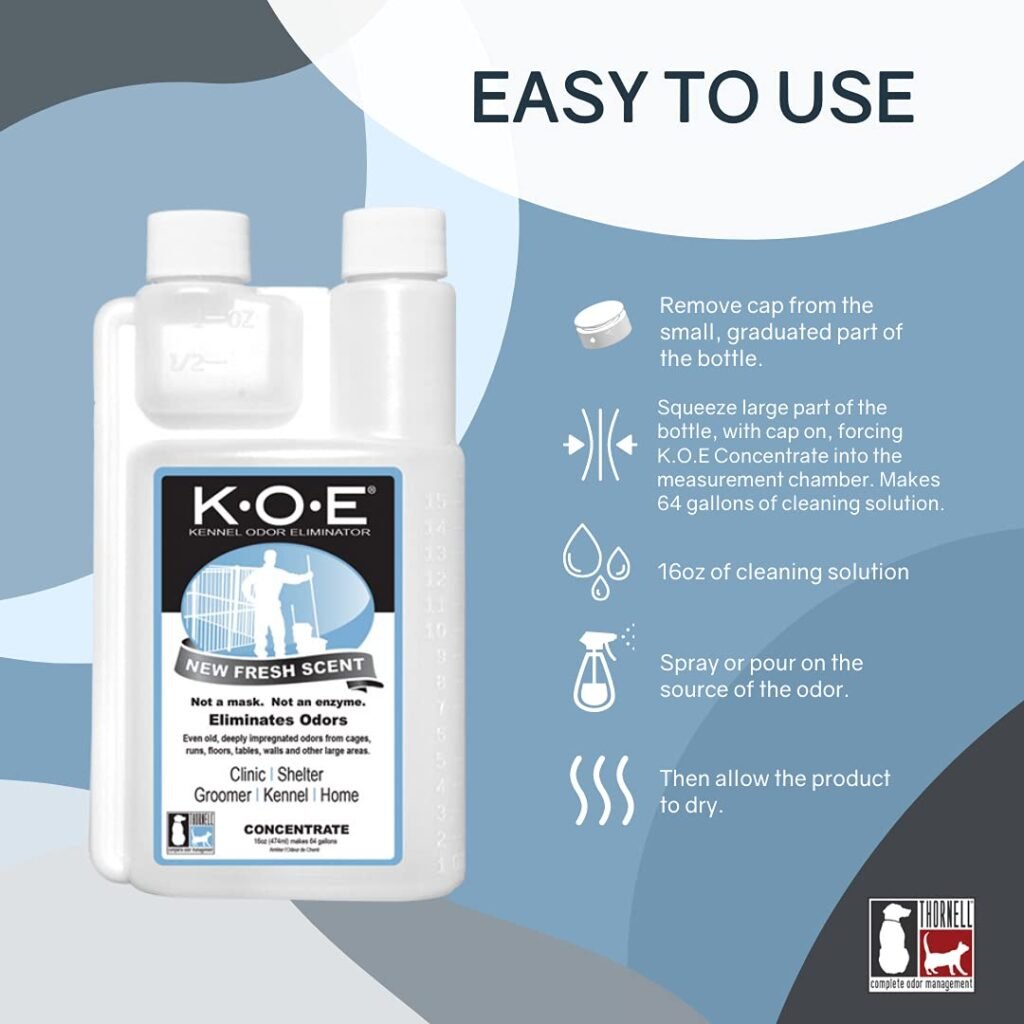
At the time of writing, this image reflects manufacturer-provided usage information. Always refer to the product label for the most current instructions and dilution guidance.
Key Characteristics of Odorcide K.O.E.
- Non-enzymatic odor elimination formula
- Designed for pet-related odors, including urine
- Used in both professional facilities and residential settings
- Concentrated formula intended for dilution
- Not a disinfectant and not a fragrance mask
K.O.E. is widely used in many environments because it does not rely on live enzymes or ongoing biological activity. This makes it more predictable across different surfaces, temperatures, and cleaning routines — especially in areas where urine odors have soaked into porous materials like concrete, grout, carpet padding, or flooring seams.
Because of this consistency, it’s often chosen for recurring or high-traffic odor areas where standard cleaners haven’t produced lasting results.
Although originally developed for kennels and animal care facilities, K.O.E. is also labeled for home use and is commonly used by pet owners dealing with lingering dog or puppy urine odors in carpets, floors, bedding, crates, and other household surfaces.
As with any pet care product, results depend on proper application and following the manufacturer’s label directions for the specific surface and situation.
Always follow the manufacturer’s instructions and test on a small, inconspicuous area before full application. Consult your veterinarian if you have specific concerns about pets, surfaces, or sensitivities.
How to Remove Dog Urine Odor and Stains from Carpet & Floors (even old ones)
Old dog urine stains are often more difficult to deal with than fresh accidents — especially once odor and moisture have penetrated beneath the surface. Even if the visible stain has faded, odor-causing compounds can remain trapped in carpet padding, grout lines, subflooring, or porous flooring materials.
Old dog urine stains are often more difficult to deal with than fresh accidents — especially once odor and moisture have penetrated beneath the surface. Even if the visible stain has faded, odor-causing compounds can remain trapped in carpet padding, grout lines, subflooring, or porous flooring materials.
Why Old Urine Stains Are Harder to Remove
When urine dries, it doesn’t simply disappear. As moisture evaporates, odor-causing compounds can crystallize and remain embedded below the surface. Changes in humidity, temperature, or routine cleaning can reactivate these compounds, causing odor to resurface days or even weeks later. This is especially common in:
- Carpet and carpet padding
- Rugs and pet bedding
- Grout lines and flooring seams
- Wood subfloors and concrete
Standard household cleaners may remove surface residue but often fail to reach what’s absorbed deeper below.
A Practical Approach to Treating Older Urine Odors
For older or recurring urine odors, a more methodical approach tends to be more effective than repeated surface cleaning. In general, this involves:
- Identifying areas where odor may have soaked below the surface
- Using products designed specifically for pet-related urine odors
- Allowing sufficient time for odor neutralization to occur
- Avoiding products that simply mask odors with fragrance
Results depend on factors such as surface type, how long the odor has been present, and how deeply it has penetrated the material.
When Household Cleaners Aren’t Enough
Many pet owners reach this stage after trying multiple cleaners with limited success. While general cleaners and enzyme sprays can help in some situations, they may struggle with older stains or high-traffic areas where urine has accumulated over time.
In these cases, odor eliminators formulated specifically for pet urine — rather than general household use — are often relied on in professional environments where complete odor removal is required.
This is particularly true in settings like kennels, shelters, veterinary clinics, and odor-sensitive facilities, where lingering urine smells are not acceptable.
Professional-Grade Odor Elimination
When standard cleaning methods haven’t produced lasting results, professionals typically turn to odor elimination products designed to neutralize odor-causing compounds at the source rather than masking them.
These types of products are commonly selected for their consistency across different surfaces and conditions, especially when dealing with:
- Deeply set urine odors
- Repeated accidents in the same area
- Porous or hard-to-treat materials
In the next section, we’ll look at one odor and stain remover frequently used in multiple environments — and why it’s also commonly used in homes dealing with persistent dog or puppy urine odors.
If the Smell Keeps Coming Back, Check These Causes
When dog or puppy urine odor seems to disappear and then return, it’s usually a sign that the underlying cause hasn’t been fully addressed. This doesn’t necessarily mean a product failed — it often means something deeper or environmental is contributing to the recurring smell.
Below are the most common reasons urine odor resurfaces, even after cleaning.
The Odor Has Soaked Below the Surface
One of the most frequent causes is absorption beneath the visible surface. In carpets, this can include padding or subflooring. On hard floors, urine can settle into seams, grout lines, or microscopic pores in the material.
Surface cleaning may improve smell temporarily, but trapped odor compounds can reactivate later — especially with changes in humidity or temperature.
The Same Area Is Being Re-Marked
Dogs are more likely to return to areas where odor remains, even if humans can no longer detect it. Lingering scent markers can encourage repeat accidents, particularly during potty training or in multi-pet households.
This can create a cycle where odor builds over time in the same location.
Incompatible or Layered Cleaning Products Were Used
Using multiple cleaners on the same area — especially fragrance-based sprays, disinfectants, or bleach — can interfere with odor removal. In some cases, product residues may actually trap odor compounds rather than neutralize them.
Effectiveness may also be reduced if a product isn’t suited for pet-related urine odors specifically.
Environmental Conditions Are Reactivating Odor
Humidity, heat, steam cleaning, or mopping can rehydrate dried urine compounds, making odor noticeable again. This is why smells often return:
- After rainy or humid weather
- During seasonal temperature changes
- Following routine floor cleaning
This doesn’t always mean new accidents have occurred — it can simply be old odor resurfacing.
The Product Used Was Designed to Mask, Not Eliminate
Some cleaners are intended to cover odors temporarily rather than neutralize them. While they may leave a space smelling fresh at first, underlying urine odor can return once the fragrance fades.
For persistent or recurring smells, products designed to neutralize odor-causing compounds — rather than mask them — tend to provide more consistent results.
When Recurring Odor Signals a Bigger Issue
If odor continues to return despite proper cleaning, it may be worth considering:
- Whether the affected material is too saturated to fully treat
- Whether replacement of padding or flooring is necessary
- Whether ongoing potty training challenges are contributing
Addressing both the odor source and the behavior or environment behind it is often key to long-term results.
Frequently Asked Questions About Dog & Puppy Urine Odor
Why does dog urine smell keep coming back after cleaning?
Dog urine odor often returns because odor-causing compounds have soaked below the surface into carpet padding, flooring seams, grout, or subflooring. While surface cleaning may remove visible residue, deeper odor can reactivate with humidity, heat, or routine cleaning.
Is puppy pee different from adult dog urine?
Puppy urine and adult dog urine are chemically similar, but puppies tend to have more frequent accidents and less bladder control. This can lead to repeated saturation in the same areas, making odor more noticeable over time. Adult dogs may re-mark areas where odor lingers, which can also cause recurring smells.
Why do some cleaners remove the stain but not the smell?
Many cleaners are designed to remove visible stains or add fragrance, not neutralize odor-causing compounds. When the underlying odor source remains, smells can return once fragrance fades or moisture reactivates dried urine residue.
Are enzyme cleaners always the best option for dog urine odor?
Enzyme cleaners can be effective for some situations, particularly fresh accidents. However, they may struggle with older or deeply set odors, especially on non-porous or heavily saturated surfaces. Results depend on surface type, prior treatments, and how long the odor has been present.
Can dog urine odor come back even if my dog hasn’t had another accident?
Yes. Changes in humidity, temperature, or cleaning methods can rehydrate dried urine compounds, making odor noticeable again. This doesn’t always mean a new accident has occurred — it’s often old odor resurfacing.
Can lingering urine odor affect potty training?
Yes. Lingering odor can signal to dogs that an area is an acceptable place to relieve themselves, even if it appears clean to humans. Fully addressing odor sources can help reduce repeat accidents, especially during potty training.
When is odor too severe to fully remove?
In some cases, urine may have penetrated deeply into materials like carpet padding, wood subfloors, or concrete. If odor continues to return despite appropriate treatment, replacement of affected materials or professional assessment may be necessary.
What’s the most important step to preventing recurring urine odor?
Using products designed specifically for pet urine odors, treating affected areas thoroughly, and addressing behavioral or environmental factors together tends to produce the most reliable long-term results.
Final Recommendation
If you’re trying to learn how to remove dog urine odor and stains permanently, using the right process and products matters far more than repeated surface cleaning. When dealing with dog or puppy urine odor — especially odors that keep coming back — the most reliable results tend to come from products designed specifically to neutralize odor at the source rather than cover it up.
For situations involving older stains, repeated accidents, or odor that resurfaces after cleaning, many people rely on non-enzymatic odor eliminators formulated for pet-related environments. These types of products are commonly used in kennels, shelters, veterinary settings, and odor-sensitive facilities where lingering smells are not acceptable.
The Odor & Stain Remover Many Pet Owners and Facilities Use (Odorcide / K.O.E.)
One product frequently used in these settings is Odorcide K.O.E. Kennel Odor Eliminator Concentrate. According to the manufacturer, it is designed for both home and professional use, including areas such as cages, runs, floors, and other surfaces where pet odors can accumulate.
Unlike fragrance-based cleaners, this type of formula is intended to neutralize odor rather than mask it. It is also commonly selected for its versatility across different environments, which makes it appealing for pet owners dealing with persistent or recurring urine odor at home.
Always follow the manufacturer’s label directions and consult your veterinarian if you have specific concerns about your pet or home surfaces.
At the time of writing, product details and usage information reflect manufacturer-provided guidance. Always follow the label instructions and surface-specific recommendations.
When This Approach Makes Sense
This type of odor eliminator may be worth considering if:
- Urine odor keeps returning despite cleaning
- The affected area has experienced repeated accidents
- Standard household cleaners haven’t produced lasting results
- Odor is present in carpets, flooring seams, or porous surfaces
Addressing both the odor source and the conditions that allow odor to persist can help prevent repeat issues over time.
Learn More About the Product
If you’d like to explore the odor eliminator commonly used in professional pet environments, you can view the product details here:
For readers dealing with recurring accidents during training, our Complete Puppy Training Guide also covers strategies to help prevent repeat marking and indoor accidents.
For daily walks and outings that support better routines and fewer accidents, choosing the right walking gear matters — we’ve broken down our best dog leashes for everyday walking and training in 2026 to help dog parents make confident choices.
As an Amazon Associate, PrimeDoggy may earn from qualifying purchases.