
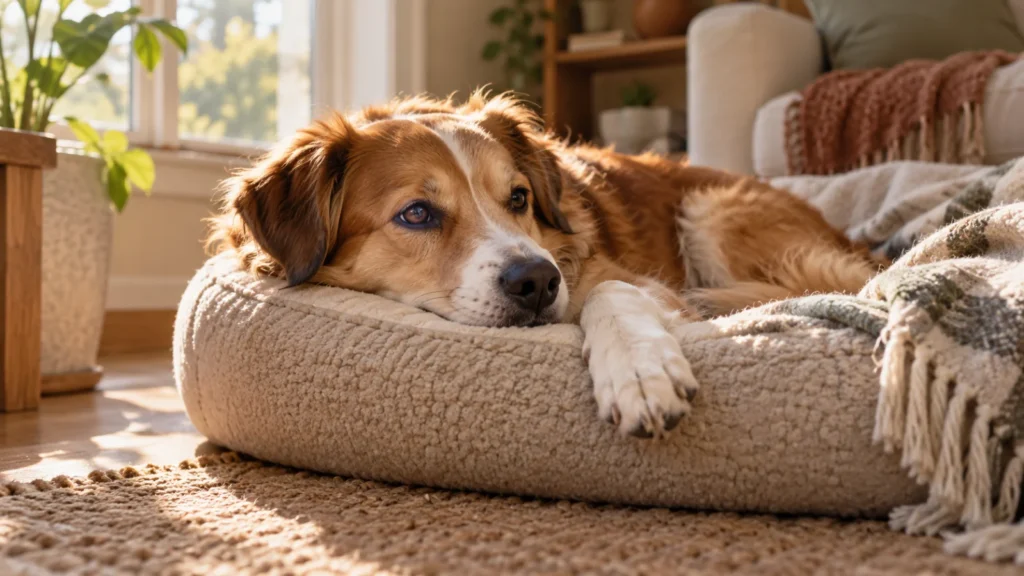
Your dog trots across the yard, stops, lifts a paw for just a moment, then carries on like nothing happened. You watch for the rest of the afternoon and see nothing. No yelping, no dramatic hobbling, and by dinnertime your dog is bouncing around the kitchen as if the morning never occurred.
This is one of the more quietly confusing situations dog owners describe, and it tends to produce a specific kind of uncertainty: is this serious, or am I overthinking it? The truth is that intermittent limping sits in a category that veterinary professionals take seriously precisely because it comes and goes. The disappearance of a symptom is not the same as the disappearance of a problem. Understanding why an on-and-off limp is still worth paying attention to, even when your dog seems completely fine, can make a real difference in how quickly the right help reaches them.
What Intermittent Limping Usually Looks Like
The pattern tends to follow a recognizable shape. A dog gets up from rest, favors one leg for a few steps, then evens out. Or they play hard, run hard, and later that evening you notice a subtle shift in how they carry themselves. The next morning: nothing. No limp, no reluctance to move, no visible swelling.
This kind of on-and-off presentation is genuinely different from a dog that limps consistently after an injury. Consistent limping is easier to act on because the signal is always there. Intermittent limping leaves room for doubt, and that doubt is what tends to delay a vet visit longer than it should.
Many owners describe spending weeks in a holding pattern, watching carefully, waiting for the limp to either worsen or disappear for good. Neither happens on a tidy schedule. The limp shows up after a long walk, after rest, after playing with another dog. It disappears just as unpredictably. That inconsistency can feel like reassurance when it is actually useful information.
Why an On-and-Off Limp Is Still Worth Paying Attention To
Intermittent limping has a few common sources, and they range from mild to meaningful. Some dogs experience early joint changes, like those associated with hip or elbow development, that produce discomfort in patterns tied to activity level or temperature. A dog might feel fine after a short walk but show subtle lameness after a longer run, or be stiff first thing in the morning when inflammation is higher and more comfortable by midday as they warm up.
Soft tissue injuries, including minor tears or strains in tendons and ligaments, can produce this same cycle. The area feels sore after use, the dog rests, the inflammation settles, and by the time you are watching closely the limp is already fading. That does not mean the underlying issue resolved.
Foot and paw concerns are worth ruling out as well. A small cut, a foxtail working its way into the skin, a cracked pad, or something lodged between the toes can cause a dog to load the leg differently in ways that look like a higher limb problem. These tend to be more visible on inspection but are easy to miss if the dog is not comfortable with you examining the paw closely.
According to the American Veterinary Medical Association, musculoskeletal conditions in dogs can present with subtle or intermittent signs, particularly in the early stages, which is one reason routine veterinary assessment matters even when symptoms seem mild or inconsistent. The American Animal Hospital Association similarly emphasizes that early evaluation of lameness, before it becomes constant or severe, typically gives the most options for effective management.
The Role of Activity and Rest in the Pattern
One of the clearest signals to track is whether the limp appears after activity, after rest, or both. These timing patterns point in different directions and can help a veterinarian narrow things down considerably.
A limp that shows up after a dog has been resting, then eases as they move around, tends to be associated with joint stiffness. The body has been still, inflammation has accumulated, and the first few minutes of movement feel uncomfortable. Many dog owners recognize this as a morning pattern, the dog gets up slowly, takes a few awkward steps, then gradually finds their stride.
A limp that appears after exercise and fades with rest tends to look more like overuse or load-related discomfort. The joint or soft tissue has been worked, pain signals increase, and the dog needs time off their feet to settle. If this is the pattern your dog follows, high-energy play sessions on hard surfaces or long hikes on uneven terrain may be the consistent trigger.
Some dogs show both patterns, which adds a layer of complexity. Keeping even rough notes about when the limp appears and what preceded it is genuinely useful for your vet and gives the visit a much clearer starting point than “it comes and goes.”
Tracking What You See (This Is the Part Most Owners Skip)
There is a gap between noticing something and actually documenting it, and that gap tends to grow the longer a symptom is intermittent. By the time a vet appointment happens, many owners find themselves reconstructing weeks of observations from memory and coming up with something vague: “it happens sometimes, maybe a few times a week, usually after she runs?”
Specific observations give a veterinarian considerably more to work with. Which leg? Front or rear? Does the dog avoid putting weight on it entirely, or just shift slightly? Does it happen first thing in the morning, after a nap, after exercise, or after being in cold weather? Does touching the leg or flexing a joint produce any reaction?
A short daily log, even just a few words, builds the kind of pattern that turns a subjective impression into a clinical picture. This matters because intermittent conditions are harder to catch in a single appointment. A dog who limps at home but trots perfectly into the exam room is common. The record you bring with you fills in what the vet cannot see in real time.
Every dog’s situation is slightly different, which is why generic advice about limping only goes so far. If you want a structured way to track your dog’s overall wellness patterns and get a personalized breakdown of what to watch for based on your dog’s specific profile, get your dog’s personalized wellness breakdown here and take the guesswork out of what to document and when.
When the On-and-Off Pattern Becomes More Urgent
Most intermittent limping situations are not emergencies, but some need prompt attention. Knowing the difference matters.
If the limp is accompanied by visible swelling, heat in the joint, or a wound you can see, move sooner rather than later. The same applies if your dog cries out when the leg is touched, stops bearing any weight at all, or if the episodes are becoming more frequent or lasting longer between rest periods. Sudden severe lameness in a large or giant breed dog warrants same-day veterinary contact.
For the more gradual, inconsistent pattern, most veterinarians would still recommend scheduling an evaluation rather than waiting for the limp to either resolve or worsen significantly. The earlier a joint or soft tissue issue is identified, the more options exist for managing it well. Waiting for clear deterioration is a strategy that tends to cost more in the long run, both in terms of the dog’s comfort and the complexity of treatment.
You can read more about recognizing behavioral and physical changes in dogs on the PrimeDoggy blog, where we cover wellness patterns that tend to go unnoticed longer than they should.
What to Expect at the Vet Visit
A lot of owners delay veterinary visits for intermittent limping because they worry about showing up empty-handed, the dog will walk in perfectly and the vet will find nothing. This is a reasonable concern, and it is also one reason documentation helps so much. The appointment does not depend on the dog limping in front of the veterinarian.
A thorough orthopedic exam includes range of motion assessment for every joint, palpation for pain responses, observation of gait patterns, and sometimes X-rays depending on what the physical findings suggest. Many conditions that produce intermittent lameness have consistent physical examination findings even when the dog is not actively limping at that moment. Joint laxity, reduced range of motion, muscle atrophy on one side, and pain responses on joint manipulation are all findable without seeing the limp itself.
Coming in with a log of when episodes occurred, what preceded them, and how long they lasted gives the veterinarian a framework to work from. The visit becomes a conversation rather than a blank slate.
Why an On-and-Off Limp Is Still Worth Paying Attention To, Even in Young Dogs
There is a tendency to assume that limping in a young dog is less concerning than in an older one. Young dogs bounce back quickly, activity levels are high, minor bumps and strains happen. That instinct is understandable, but intermittent limping in younger dogs can be a sign of developmental orthopedic conditions that are very manageable when caught early and much harder to address once they have progressed.
Conditions like hip dysplasia, elbow dysplasia, and osteochondrosis (a disruption in normal bone and cartilage development) often appear during growth phases and produce exactly the kind of inconsistent lameness described here. A young dog who seems fine most of the time but occasionally favors a limb after play is worth having evaluated, particularly in breeds that carry higher risk for these conditions.
Waiting for the problem to become obvious in a young dog means waiting for joint changes that cannot be reversed. Early intervention, whether that is weight management, modified exercise, physical therapy, or another approach, works best when the joint has not yet been significantly compromised.
Supporting Your Dog Between Appointments
While you are tracking what you see and working toward a veterinary evaluation, there are a few things that tend to support a dog showing intermittent lameness without causing harm.
Moderating exercise intensity is usually a reasonable starting point. Long runs, intense fetch sessions on hard surfaces, and activities involving a lot of jumping and landing are worth pulling back on temporarily until you have more clarity. Shorter, calmer walks on softer surfaces give the dog movement and mental engagement without adding load to a joint or tissue that may be recovering.
Providing a supportive resting surface matters more than most owners realize. A orthopedic dog bed with good foam support reduces pressure on joints during rest, which is particularly relevant if the limp tends to appear after lying down for extended periods.
Avoid the temptation to give over-the-counter pain relievers meant for humans. Many common human medications, including ibuprofen and acetaminophen, are toxic to dogs. If you feel your dog needs pain relief while you are waiting for an appointment, that conversation belongs with your veterinarian.
Recommended Next Step
Intermittent limping is the kind of thing that is easy to keep watching without ever reaching a clear conclusion. The limp fades, the dog seems fine, and the decision gets deferred again. But vague symptom tracking rarely produces the clear picture a veterinarian can actually use, and generic advice about what to watch for does not account for your dog’s age, breed, activity level, or history.
The Dog Wellness Profile builds a structured picture of your dog’s specific situation, pulling together the patterns that matter for their wellbeing and giving you a personalized starting point rather than a list of general possibilities. Used by dog owners working to build calmer routines every day, it turns observation into something actionable. If you have been watching and waiting without knowing quite what to do next, this is where a clearer plan begins.
Start your dog’s calm plan here, free, instant, and built around your dog specifically: Start Your Dog’s Personalized Wellness Plan