
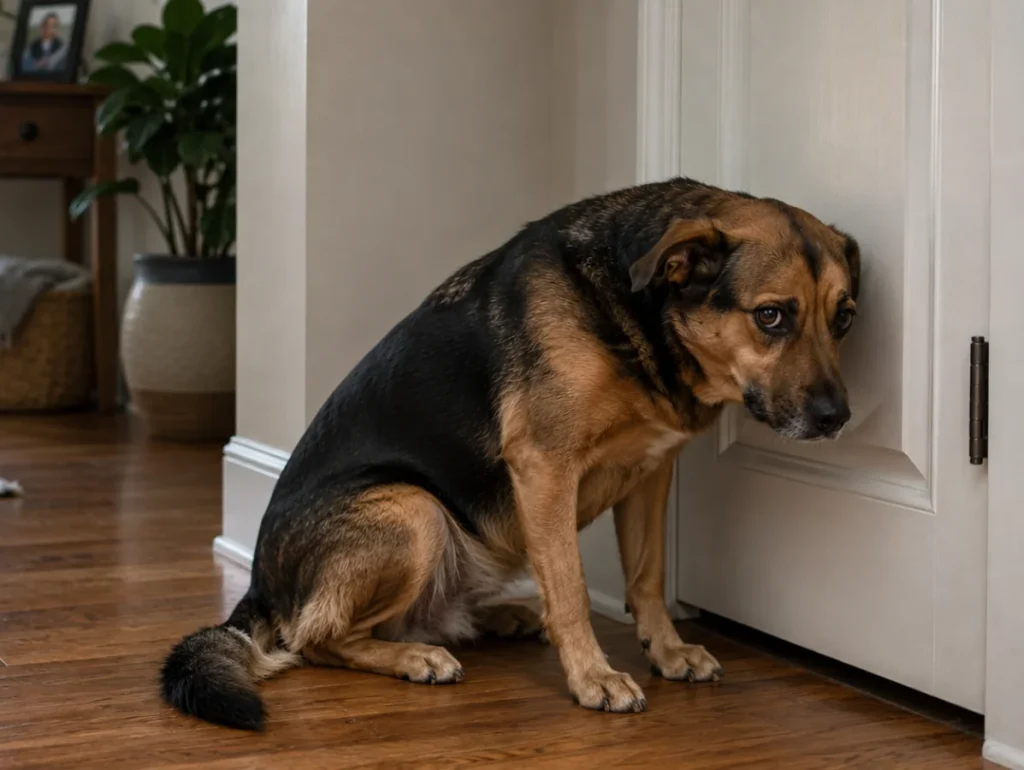
What do you do when the dog you have known for years suddenly snaps at you?
Not a puppy who is still figuring out the world. Not a rescue dog with a complicated history you are still piecing together. Your dog. The one who has slept at the foot of your bed for three years, greeted you at the door every single day, and never once given you a reason to flinch. And now you are flinching.
Sudden aggression in adult dogs is one of the most frightening behavior changes an owner can experience. It also tends to be one of the most misunderstood. Before you search for a training fix, before you change a routine, before you do anything else, there is one step that matters more than all the others. This article walks you through exactly why.
Why This Behavior Change Is Different From Other Training Challenges
Many behavior problems in dogs develop gradually. Leash pulling, for example, may become more noticeable over time, while other behavior challenges can develop or worsen across weeks or months. You can often look back and trace the thread. You can usually look back and trace the thread.
Sudden aggression in adult dogs does not follow that arc. When a dog who has been reliably calm and social begins growling, snapping, or biting without an obvious trigger, that shift signals something worth taking seriously. It is not a lapse in training. It is rarely about dominance, despite what older advice might suggest.
What it often signals is something physical. Pain is one of the most common and most overlooked drivers of sudden behavior change in dogs. A dog who is hurting may snap when touched in a sensitive area, when asked to move in a certain way, or when approached while resting. They are not being defiant. They may be communicating pain or discomfort.
This is why the advice in this article starts with a vet, not a training plan.
Sudden Aggression in Adult Dogs: The Medical Reasons to Rule Out First
A behavioral diagnosis should come after a medical one has been ruled out. It is also a clinical standard endorsed by organizations like the American Veterinary Society of Animal Behavior and the American Veterinary Medical Association, both of which recognize that sudden behavior changes in adult animals may have an underlying physical cause.
Some of the conditions linked to sudden aggression can include: hypothyroidism, chronic pain from arthritis or an undetected injury, neurological conditions, dental disease, vision or hearing loss, and hormonal imbalances. Each of these can make a dog more reactive, more easily startled, or more likely to guard the area of their body that hurts.
Consider what this can look like in real life. A dog who has always loved being petted begins growling when you scratch behind her ears. She is not suddenly protective of her space. She may have an ear infection so uncomfortable that being touched there has become genuinely painful. Without knowing that, every training attempt misses the actual problem entirely.
This is not a case where you try a calming supplement and see what happens. This is a vet call, and it needs to happen before anything else.
When the Vet Visit Comes Back Clear: What Comes Next
If your veterinarian has examined your dog and cleared them medically, that is genuinely good news. It narrows the picture considerably. Now the question shifts from “is something wrong physically?” to “what has changed in my dog’s environment, routine, or emotional baseline?”
Behavioral triggers for sudden aggression can include significant changes in the household (a new baby, a new pet, a move), a frightening or stressful experience the owner may not have witnessed, accumulated stress over time that finally crossed a threshold, or a fear response that has escalated into defensive behavior. Some dogs who appear to snap without warning have actually been giving quiet signals for a long time. These can include lip licking, yawning, turning away, or suddenly stiffening. These signs can be easy to miss until the behavior becomes impossible to ignore.
This is also where individual context matters enormously. Two dogs who both show sudden aggression in adulthood may be experiencing completely different things underneath. One may need a slow desensitization plan. Another may need a medication consultation alongside behavior support. Generic advice tends to fall short here, because the path forward depends on what is actually driving the behavior in that specific dog.
Every dog’s situation is slightly different, which is why a personalized breakdown tends to be more useful than a checklist.
For help with some of the common dog behavioral challenges, get your personalized breakdown here → Get Your Dog’s Personalized Wellness Profile
5 Warning Signs Worth Noting Before the Snap
Aggressive behavior is often preceded by subtler signs of discomfort or stress. Understanding those earlier signals can help you respond more effectively and keep everyone safer while you work through this.
1. Stiffening or freezing when approached, touched, or when another animal or person comes near a resource. The body goes still before anything else happens.
2. Low growling or grumbling in situations that previously felt neutral. This is a dog trying to communicate discomfort before escalating.
3. Hard staring, especially when paired with a stiff posture. In context, this can be a sign of heightened arousal or discomfort.
4. Showing teeth without vocalizing. A silent snarl is easy to miss but important to take seriously.
5. Snapping at air or toward a person without making contact. This is a warning that the dog is already highly uncomfortable and the situation should be de-escalated.
These signals don’t tell you why the behavior is happening, but they do mean you should take the situation seriously and give your dog space. The goal is to understand what they are responding to so the situation can be addressed, not suppressed.
What to Do (and Not Do) Right Now
While you are working toward a vet appointment and, if needed, a consultation with a certified behavior professional, there are some practical steps that can reduce risk without making the underlying issue worse.
Avoid putting your dog in situations where they have already shown aggression. This is not about giving up. It is about protecting their ability to stay below threshold while you figure out what is happening. Preventing repeated triggering also helps keep the situation from escalating while you investigate the underlying cause.
Do not punish the growl. It sounds counterintuitive. But the growl is communication. Removing it through punishment does not remove the discomfort that caused it. It removes the warning signal, which tends to make the behavior more unpredictable rather than less.
Keep a simple log. Note when the behavior happens, what was happening just before, where the dog was in the space, and who was present. This information is genuinely useful to both a veterinarian and a trainer. Patterns that feel random often become clearer when written down.
If you are working with a trainer already, share this article or the principles in it. For detailed guidance on choosing the right kind of professional help, the AVSAB website provides clear information on what to look for in a behavior consultant.
Sudden Aggression in Adult Dogs and Calming Support: Where Supplements Fit
Before considering any calming supplement, talk with your veterinarian, especially when aggression is new or sudden. Supplements should not be used to delay evaluation of an unexplained behavior change.
Once medical causes have been evaluated, some owners ask their veterinarian about supportive calming products such as NaturVet Quiet Moments Calming with Melatonin Dog Supplement. Products containing ingredients such as L-theanine or melatonin may be appropriate for some dogs, but suitability depends on the individual dog, other medications, and the situation.
Calming supplements are not a behavior intervention on their own. They may be a reasonable addition to a broader plan once medical causes are ruled out and you are working with a professional. Just keep the sequencing clear: medical evaluation first, professional guidance second, supportive tools as part of the overall plan.
As an Amazon Associate, PrimeDoggy may earn from qualifying purchases.

Recommended Next Step
If your dog has shown sudden behavior changes and you are trying to figure out where to start, the difficulty is real. The internet offers a lot of advice, but most of it is written for a generic dog in a generic situation. Your dog is neither of those things.
What tends to help most is a structured starting point based on your dog’s specific behavior patterns, age, environment, and history. Not a one-size-fits-all checklist, but an actual framework you can bring to your vet appointment or use alongside a certified trainer.
The Dog Wellness and Behavior Profile is a tool we created that can help with some of the more common behavior challenges for your dog. It takes what you know about your dog and organizes it into a personalized overview of behavior patterns, routines, and areas worth exploring or discussing with your veterinarian or behavior professional. Used by dog owners working to build calmer routines, it is free, takes only a few minutes, and gives you something concrete to work from instead of searching in circles.
Start your dog’s calm plan here, free, instant, and built around your specific dog: Start Your Dog’s Personalized Calm Plan